

Think back to your first week in a new job. Much of what you learned probably did not come from the induction slides. It came from watching how a colleague handled a difficult customer, asking the person at the next desk how a system worked, or noticing which habits your manager praised. Nobody called it training, yet it shaped how you did your work.
That is social learning. This article explains what it is, the theory behind it, everyday examples, its benefits and how to build it into online courses, where learners can easily end up studying alone.
What Are the Benefits of Social Learning?
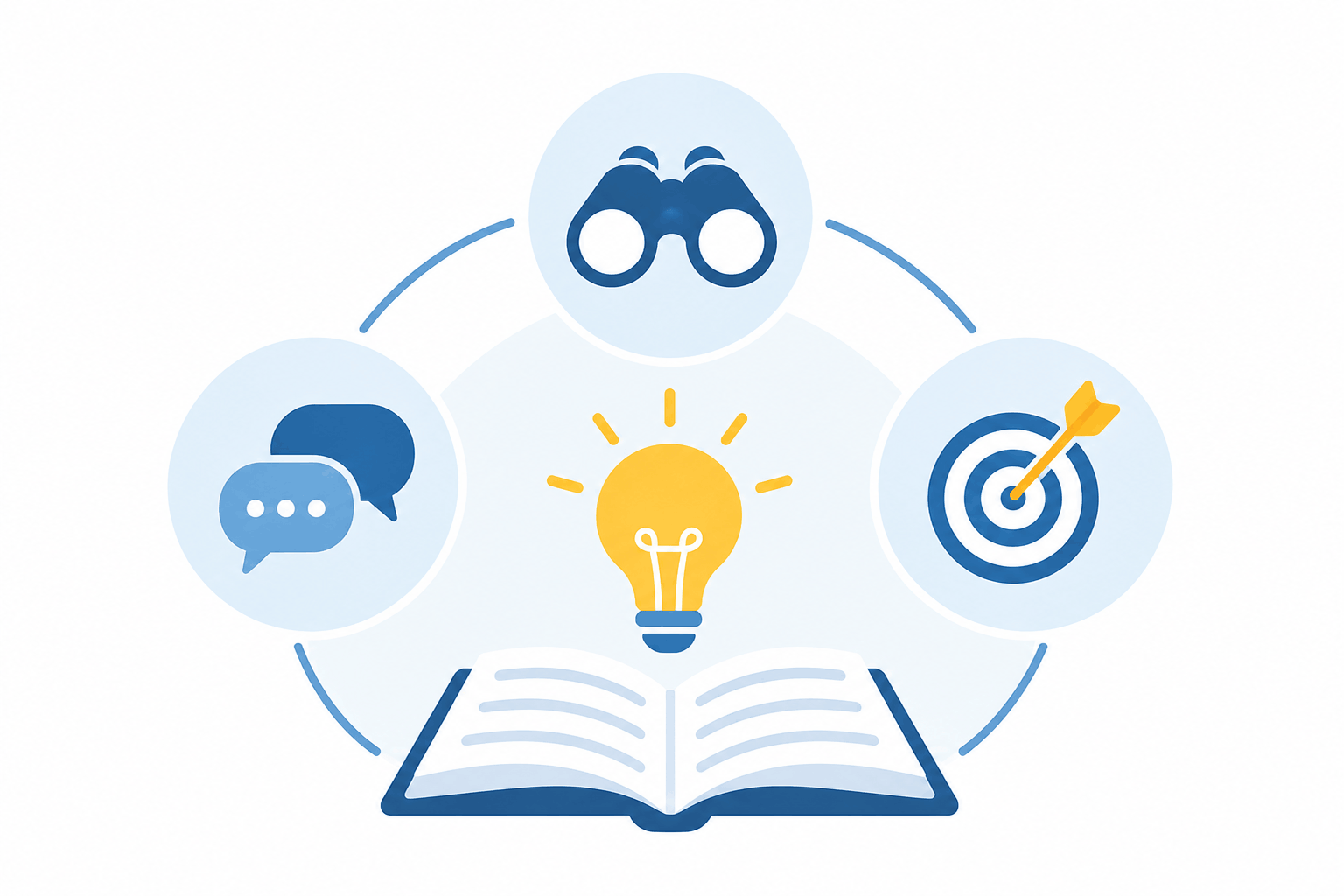
The clearest of the social learning benefits is relevance. Course content is written for a general audience, but a colleague can explain how an idea applies to your particular role, region or customer. That practical translation is often what turns knowledge into action.
Social learning also improves understanding. Explaining an idea to someone else forces a learner to organise their own thinking, and many people only realise what they do not understand when they try to put it into words. Hearing different viewpoints in a discussion has a similar effect, because it shows that a problem can be approached in more than one way.
For online courses in particular, there is the question of motivation. Self-paced learners who work entirely alone are more likely to lose momentum. A cohort, a discussion group or even a single learning partner adds a sense of shared progress and gentle accountability, which helps people keep going.
Finally, social learning spreads expertise across an organisation. Knowledge that sits with a few experienced people tends to leave when they do. When those people share what they know through discussions, demonstrations and mentoring, it becomes part of how the whole team works.
There are limits. Learners can copy poor habits as easily as good ones, and discussion forums can be dominated by a few confident voices. Social learning works best with a clear structure and someone guiding it, rather than being left entirely to chance.
Strategies to Build Social Learning Into Online Courses
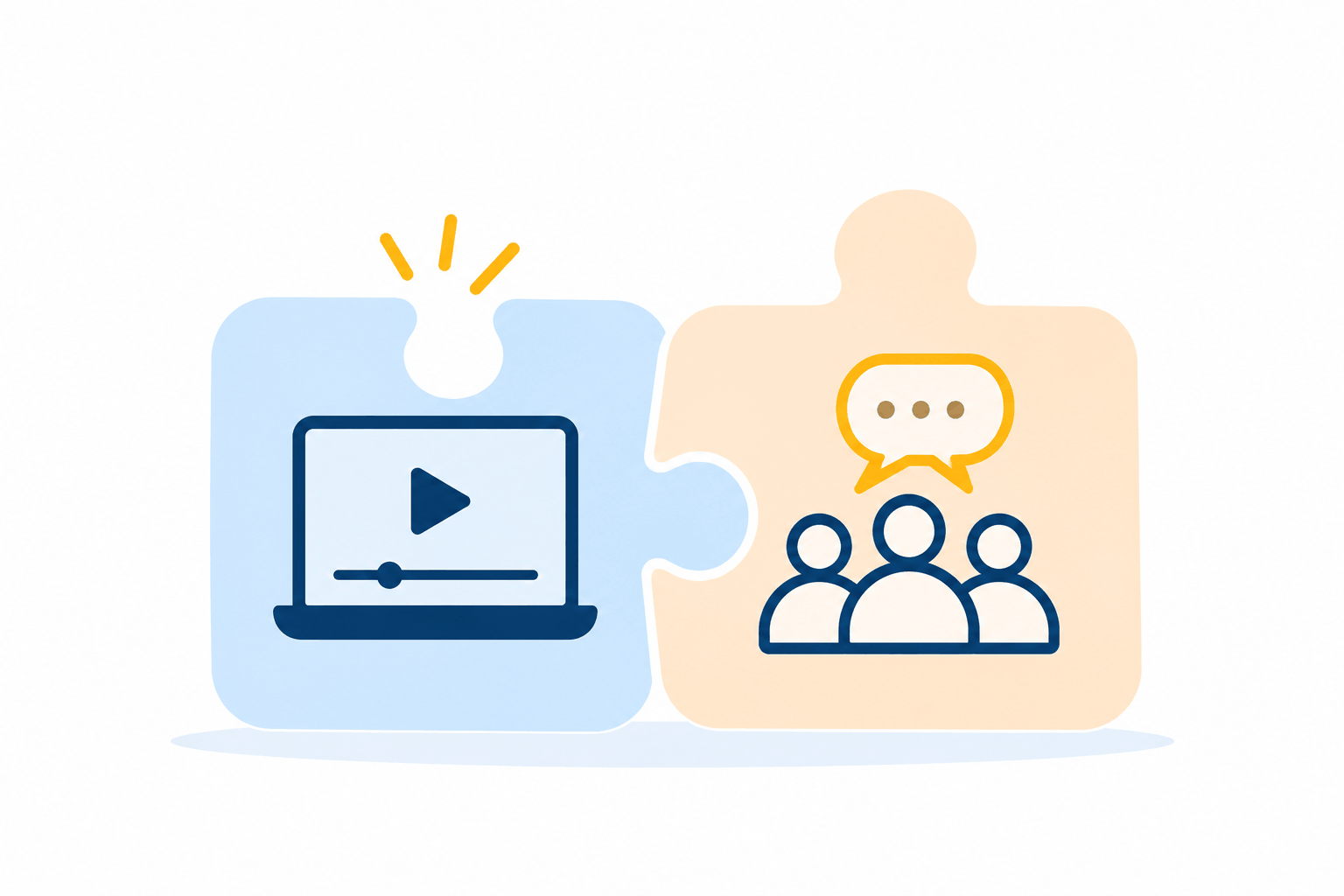
Online courses do not have to be solitary. With some planning, most of the conditions Bandura described can be created on screen.
Start by showing, not only telling. Bandura's work suggests that people learn behaviour by watching it, so short videos in which realistic characters handle a situation well, and sometimes badly, are a strong starting point. Learners see the behaviour, notice the consequences and remember it more easily. Margo Learning's scenario-based video is designed around this principle.
Give discussions a clear purpose. An open forum with the instruction to "share your thoughts" usually stays quiet. A specific question, such as asking learners to describe a time they faced a particular problem and what they would do differently now, produces far more useful conversation.
Use peer review. Asking learners to give feedback on each other's work, using a simple set of criteria, helps both the reviewer and the person receiving the feedback.
Move learners through in groups. A cohort that starts and finishes together, with a few scheduled live sessions, creates a shared experience that purely self-paced courses lack.
Bring in experts and peers. Short recorded interviews with experienced practitioners, or live question-and-answer sessions, give learners credible models to learn from. Mentoring and buddy programmes extend this beyond the course itself.
And make room for practice. Role plays in live sessions, branching scenarios and real tasks with feedback give learners the chance to reproduce what they have seen, which is the step most often skipped.
These approaches are particularly effective in corporate learning and development, where so much of what employees need to know lives in the experience of their colleagues.
Frequently Asked Questions
It is the idea that people learn by watching others and seeing what happens to them, not only through their own direct experience. It was developed by the psychologist Albert Bandura.
Social Learning Theory Examples
Social learning theory examples are easy to find once you start looking. A child learns to speak by listening to the adults and older siblings around them, long before any formal lesson. A junior doctor learns how to deliver difficult news to patients by watching how experienced consultants do it. A new sales executive sits in on calls with a top performer and starts using the same questions and phrases.
Online, the same pattern appears in different forms. A learner stuck on a coding problem posts a question in a course forum, and three other learners explain how they solved it. An apprentice watches a recorded demonstration of a repair, pauses it, and copies each step. Employees in a leadership programme share real situations from their teams and discuss how they handled them, and each person leaves with ideas they would not have found in the course material alone.
In each case, the learning comes from seeing, hearing or discussing what someone else did, not only from studying content.