

A few years ago, most people thought of online classes as a temporary measure, something to manage until everyone could return to the classroom. That view has changed. Schools now set homework on digital platforms, universities record and stream lectures, and companies train employees across several cities in a single live session. Virtual learning has become a normal part of how people study and work.
This article explains what virtual learning is, the main types, the benefits of a virtual learning environment, the challenges to plan for and how to choose the right virtual learning solutions.
What Is Virtual Learning?
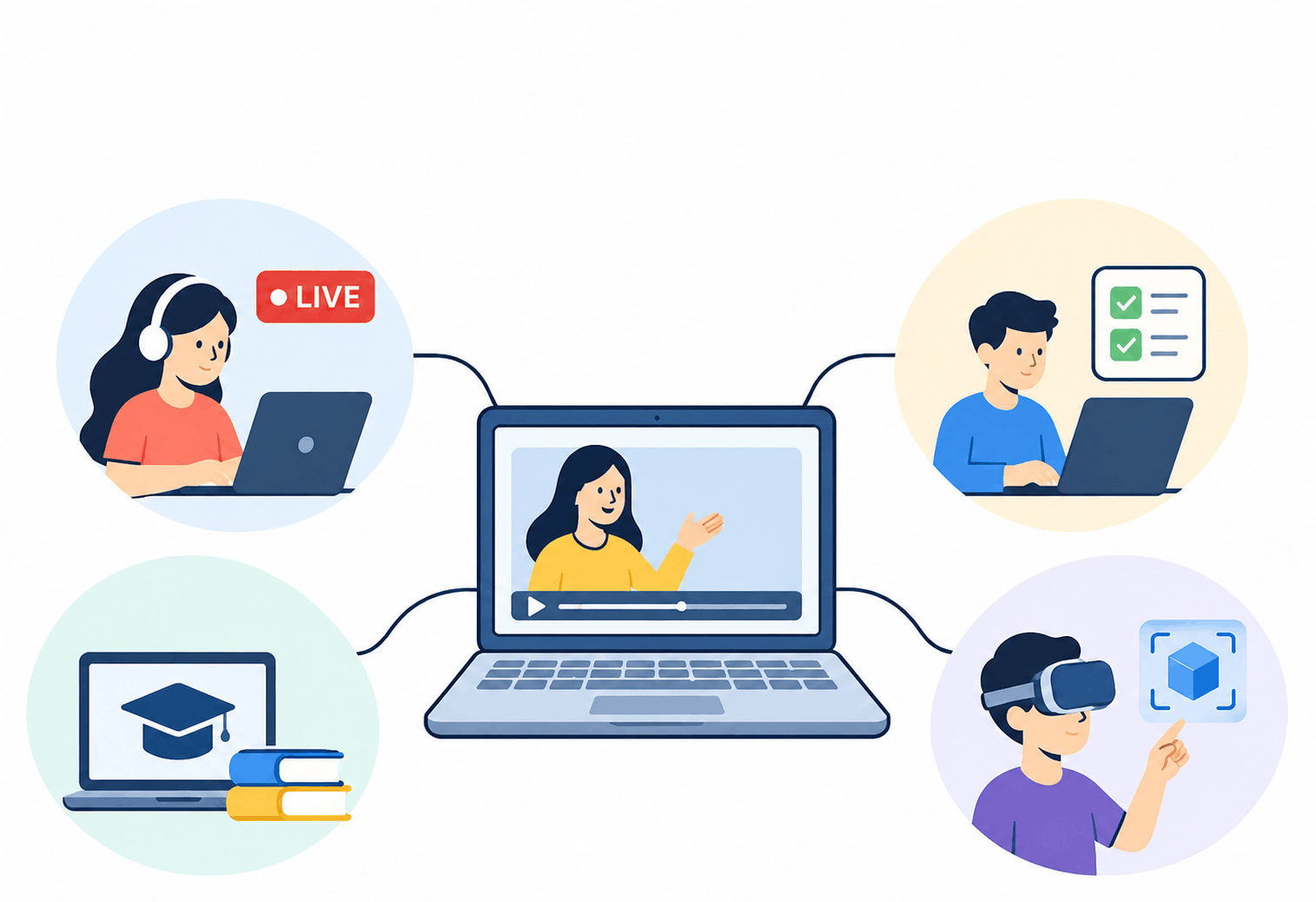
Virtual learning is education or training delivered through digital technology, where the learner and the instructor are not in the same physical place. Lessons, materials, discussions and assessments all happen online, through a computer, tablet or phone.
So what does virtual learning mean in practice? A student might join a live mathematics class over video, then complete practice exercises on a learning platform in the evening. An employee might watch a short product module on their phone during a commute and attend a live workshop with colleagues from three other offices on Friday. Both are learning virtually, even though their experiences look quite different.
The term overlaps with online learning and eLearning, and the three are often used interchangeably. Where a distinction is made, virtual learning usually emphasises recreating the classroom online, with a teacher, a schedule and a group of learners, rather than simply providing content to study alone.
What Is the Meaning of Virtual Training?
The virtual training meaning is close to virtual learning but is used mainly in the workplace. Virtual training refers to job-related courses delivered online, such as onboarding, compliance, product knowledge, software skills and leadership development.
One common format is virtual instructor-led training, often shortened to VILT. A trainer runs a live session on a video platform, using slides, demonstrations, polls, breakout rooms and exercises, much as they would in a training room. It keeps the human contact of classroom training while removing travel and venue costs.
What Are the Types of Virtual Learning?
The main types of virtual learning differ in when learners take part and how much they interact.
Synchronous learning happens in real time. Learners and the instructor meet at a set time in a virtual classroom, where they can ask questions, discuss ideas and work in small groups. Live classes, webinars and VILT sessions all fall into this category. The strength is interaction. The limitation is that everyone must be available at the same time.
Asynchronous learning happens on each learner's own schedule. They work through recorded lectures, interactive modules, readings and quizzes whenever it suits them, often with discussion forums for questions. This suits learners in different time zones or with unpredictable working hours, though it requires more self-discipline.
Blended or hybrid learning combines the two, and sometimes adds in-person sessions as well. A course might use self-paced modules for theory and live sessions for discussion and practice.
Immersive learning uses simulations, virtual labs and, increasingly, virtual and augmented reality to let learners practise in realistic settings. A science student can carry out an experiment in a virtual lab, and a technician can practise a repair procedure before handling real equipment.
Most effective programmes use more than one type. Well-produced instructor-led video, for example, gives asynchronous learners the sense of a real teacher guiding them, while live sessions are reserved for questions and practice.
What Are the Benefits of a Virtual Learning Environment?
A virtual learning environment, often called a VLE, is the online space where virtual learning takes place. It usually brings together course materials, assignments, discussion forums, live class links, quizzes and progress tracking in one platform. The benefits of a virtual learning environment are felt by learners, teachers and organisations alike.
The first is access. Learners can join from anywhere with an internet connection, which opens education to people in remote areas, those with caring responsibilities and employees in distant offices. A course that once reached one city can now reach an entire country.
The second is flexibility. Recorded sessions and self-paced modules let learners study when they are most able to concentrate, and revisit difficult material as often as they need.
Cost is the third. Virtual delivery removes the expense of venues, travel, accommodation and printed material. For organisations training large numbers of people, these savings are often substantial.
Consistency matters too. Every learner receives the same core content and the same assessment, regardless of location or trainer, which is particularly valuable for compliance and certification.
Finally, a VLE produces useful data. Teachers and trainers can see who has completed which activity, how learners performed in each assessment and where a group is struggling, then adjust their teaching accordingly.
What Are the Challenges of Virtual Learning?
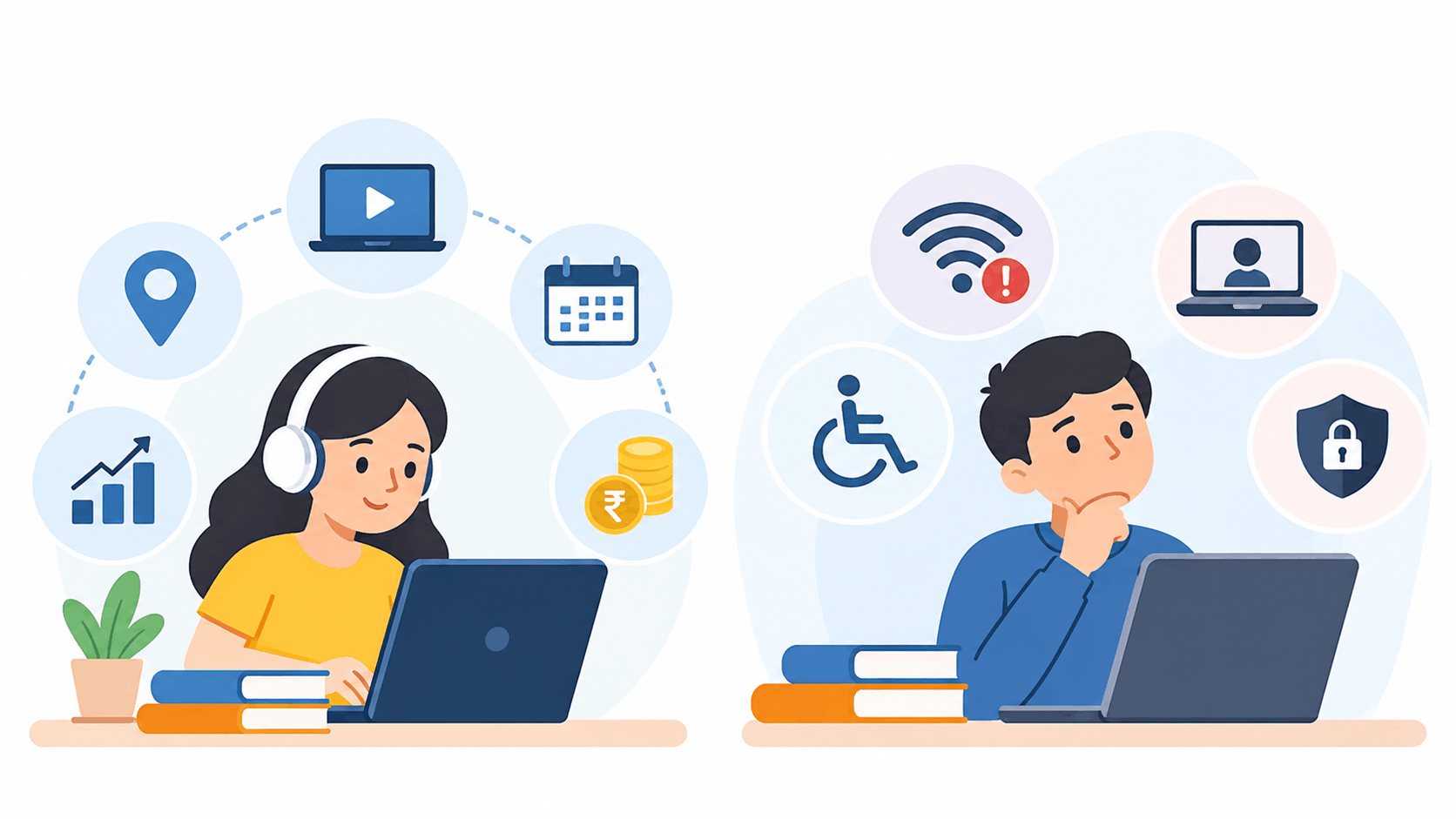
Virtual learning brings real challenges, and most of them can be managed with good planning.
Access to technology is the most basic. Not every learner has a reliable device or a strong internet connection. Lightweight content, mobile-friendly design and downloadable materials make a significant difference for learners with limited connectivity.
Engagement is the most common complaint. Long lectures that work in a room often fail on a screen, and learners drift into other tabs. Shorter sessions, frequent interaction, polls, breakout discussions and practical tasks help to hold attention.
Isolation is a related problem. Learners studying alone can lose motivation without the informal contact of a classroom. Cohorts, discussion groups and regular live check-ins restore some of that sense of belonging.
Assessment integrity needs careful thought, since online examinations are harder to supervise. Project work, open-book tasks and practical assessments are often more reliable than closed-book tests taken at home.
Accessibility is easy to overlook. Videos without captions, documents that screen readers cannot read and interfaces that cannot be used with a keyboard exclude some learners entirely. Building accessibility and WCAG compliance into virtual courses from the start avoids this and is often a legal requirement as well.
How to Choose the Right Virtual Learning Solutions
Virtual learning solutions range from a learning management system and a video platform to complete programmes of custom courses and live training. The right choice begins with your learners: who they are, where they are, what devices they use and how much time they have. From there, decide which parts of the learning need to be live and which can be self-paced, check that your platforms work together, and make sure the content itself is designed for the screen rather than simply moved online from a classroom. A short pilot with a small group will show what works before you commit to a full rollout.
How Can Margo Learning Help With Virtual Learning?
The platform delivers a virtual course, but the content decides whether learners stay engaged. Margo Learning's instructional designers, subject experts and video team build self-paced modules, instructor-led videos, interactive simulations and accessible course materials for schools, universities, skilling programmes and companies. Contact Margo Learning to discuss the virtual learning programme you have in mind.
Frequently Asked Questions
It means learning online through a computer, tablet or phone, instead of in a physical classroom, with lessons, materials and assessments delivered digitally.