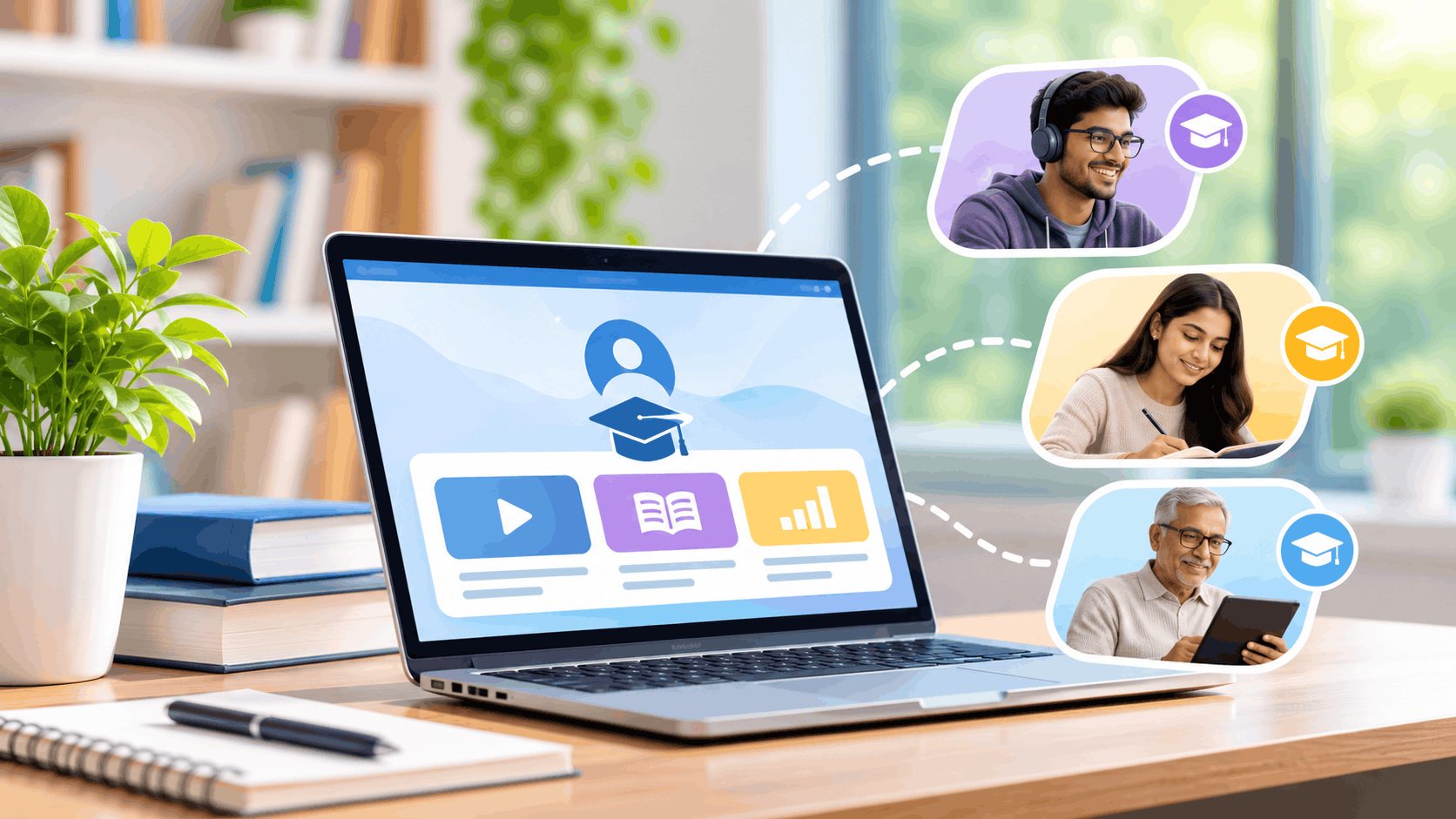
Two employees join a company on the same day. One has ten years of experience in the industry and needs only to learn the company's systems. The other is a recent graduate who needs the fundamentals. Both are enrolled in the same twelve-hour induction course. The first is bored by the end of the morning, and the second is overwhelmed by the afternoon.
This scene repeats in classrooms and training rooms everywhere. Personalized learning sets out to fix it. This article explains what personalized learning is, why it matters, the approaches and tools that make it work, and examples from education and the workplace.
What Is Personalized Learning?
A practical personalized learning definition is this: an approach in which the pace, path, content or goals of learning are shaped around each learner's needs, strengths and interests, rather than being the same for everyone.
In a traditional course, the content and schedule are fixed, and learners are expected to keep up. In a personalized course, the learner's starting point matters. Someone who already understands a topic can move on. Someone who is struggling gets more time and support. Learners may also choose between different formats, such as a video, a reading or a hands-on task, and set some of their own objectives.
Personalization is not the same as leaving learners entirely to themselves. The outcomes the course must achieve stay fixed. What changes is the route each person takes to reach them.
Why Personalized Learning?
The case for personalized learning starts with a simple fact: no group of learners is the same. They differ in prior knowledge, confidence, language, time available and the reasons they are learning in the first place. A single pace and path inevitably suits some people better than others.
Personalization makes better use of learners' time. Skipping material that someone already knows is not a shortcut. It frees time for the areas where they genuinely need to improve.
It also tends to raise engagement. People are more motivated when they can see why a task matters to them, when the difficulty is about right and when they have some say in how they learn. A personalized learning experience offers all three.
Finally, it gives teachers and trainers better information. When each learner's progress is tracked individually, it becomes clear who needs help and with what, long before a final examination exposes the gaps.
The Main Approaches to Personalized Learning
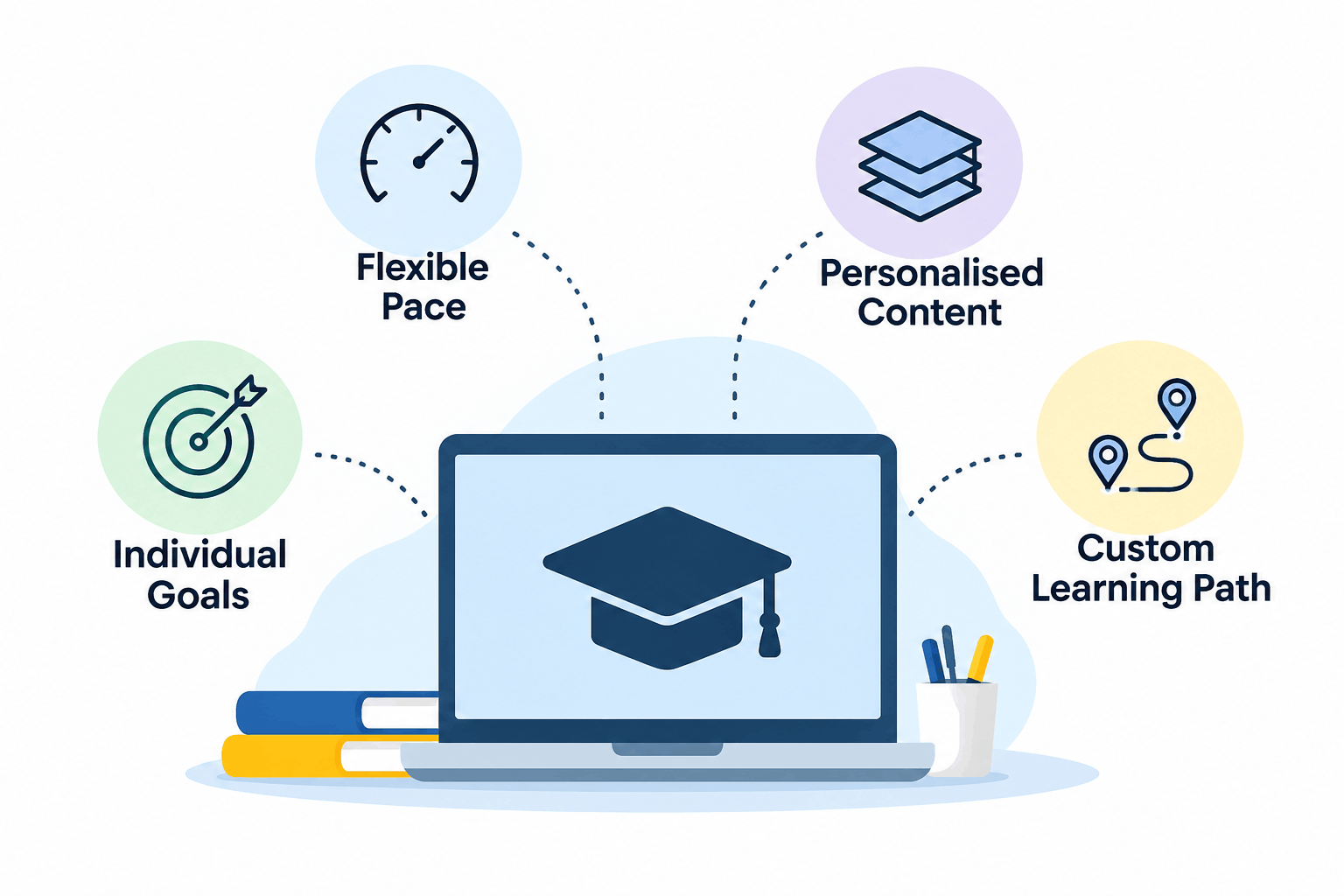
Personalized learning is not one method but a set of approaches, and most programmes combine several.
The starting point is usually a learner profile. This records what each learner already knows, often through a short diagnostic assessment, along with their role, goals and any particular needs. It allows everything else to be tailored from day one.
Next come personalized learning goals. Instead of one objective for the whole group, each learner agrees on a small number of specific, achievable targets, ideally with a teacher, mentor or manager. A school student might aim to improve reading fluency by a certain level this term. An employee might aim to be ready to lead client meetings within three months. Clear personal goals give learners direction and make progress easy to see.
Flexible pacing lets learners move faster or slower depending on how they are doing. Many personalized programmes use competency-based progression, in which learners move on once they have shown mastery, rather than when the calendar says so.
Choice of path and format gives learners some control over how they learn. They might pick from a set of elective modules, choose between a video and an article, or select a project that interests them.
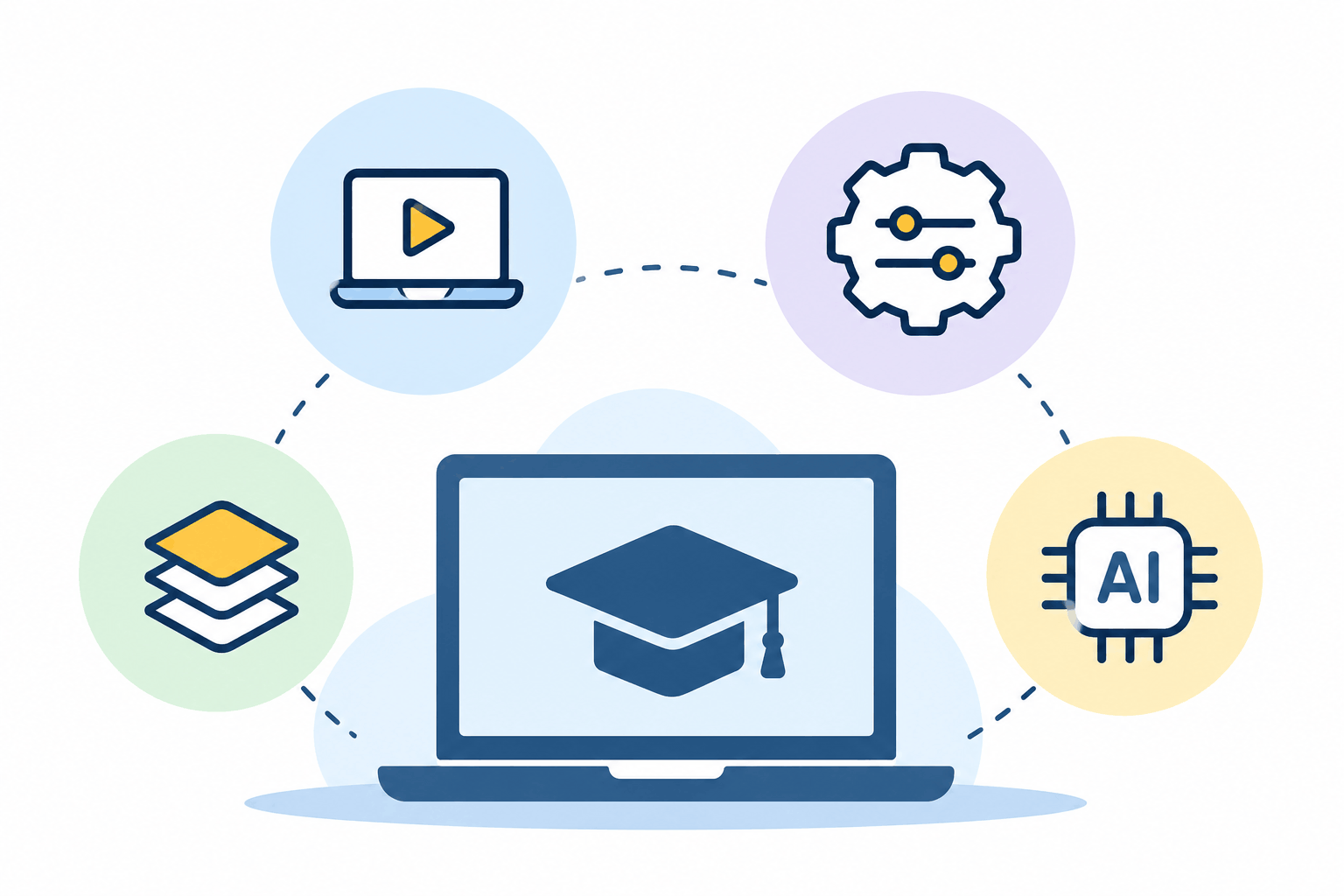
Adaptive technology adjusts content automatically based on a learner's answers, offering extra practice or moving them ahead.
Finally, human support remains essential. Coaching, mentoring and regular check-ins help learners reflect on progress and adjust their goals. Technology can personalize content, but people personalize encouragement.
All of these approaches depend on content that is built in small, flexible pieces. A course delivered as one long module cannot easily be rearranged, whereas short, self-contained microlearning modules can be combined differently for each learner.
Tools That Support Personalized Learning
The tools used for personalized learning fall into a few broad groups, and most organisations already have at least one of them.
Learning management systems can assign different learning paths to different groups, release content based on assessment scores and track each person's progress. For many organisations, this is the simplest place to start.
Adaptive learning platforms go further, adjusting difficulty and sequence question by question. They are common in mathematics, language learning and test preparation.
Learning experience platforms recommend content based on a learner's role, interests and past activity, much as a streaming service suggests what to watch next. They are increasingly used in workplaces for self-directed development.
Artificial intelligence is adding new options, including tutoring assistants that answer questions and suggest next steps, and tools that draft practice questions at different levels. These can extend personalization considerably, but they still need clear goals and well-designed content behind them.
Personalized Learning Examples
In a primary school, a teacher gives each pupil a short reading assessment at the start of term. Pupils then work in small groups on texts matched to their level, while the teacher rotates between groups. Each child has a personal reading target, and progress is reviewed every few weeks.
In a test preparation programme, students take a diagnostic mock test. The results produce an individual study plan that focuses on their weakest topics, and the plan updates after every practice test.
In a university, students on a broad degree choose elective modules and a final project linked to their career interests, with an academic adviser helping them plan the combination.
In personalized corporate learning, a new sales hire completes a short skills assessment during onboarding. Based on the results, the system assigns a learning path that skips the product basics they already know and adds negotiation practice where they scored lower. Their manager reviews progress against agreed goals at thirty, sixty and ninety days.
Challenges to Plan For
Personalized learning takes more preparation than a single, fixed course. Content must be broken into smaller units and mapped to clear outcomes. Teachers and managers need time to review progress and support individuals. Learners who are given a great deal of choice may also need guidance, because too many options can leave people unsure where to begin. Starting with one or two approaches, such as diagnostic assessment and personal goals, is often more successful than attempting everything at once.
How Can Margo Learning Help With Personalized Learning?
Personalization works only when there is the right content to personalize. Margo Learning's instructional designers and subject experts build modular courses, diagnostic assessments, learning paths and microlearning for schools, test preparation providers, universities and companies, with every unit mapped to a clear outcome. Contact Margo Learning to discuss how to build learning that fits each of your learners.
Frequently Asked Questions
It is an approach in which each learner's pace, path or content is adjusted to their needs and goals, instead of everyone following the same course in the same way.