
Most of us have been through a group project that went wrong. One person did most of the work, two people did a little, and someone else appeared only for the final presentation. Everyone received the same mark, and nobody learned much about working together.
That is not collaborative learning, although it is often mistaken for it. When it is designed properly, learning together is one of the most effective ways for people to understand difficult ideas and build the skills that schools and employers value. This article explains what collaborative learning is, why it works, the techniques teachers use and examples from classrooms, universities and workplaces.
What Is Collaborative Learning?
A clear collaborative learning definition is this: an approach in which learners work together in pairs or small groups towards a shared goal, and each person's understanding grows through the exchange of ideas with the others.
The collaborative learning meaning rests on two conditions. First, the task must genuinely need more than one person, so that learners depend on each other rather than dividing the work and stitching it together at the end. Second, every member must remain responsible for learning the material, not just for completing their part.
This is what separates collaborative learning from ordinary group work. Sitting students at the same table does not make them collaborate. The structure of the task does.
The idea draws on the work of the psychologist Lev Vygotsky, who argued that people learn best when working slightly beyond what they can manage alone, with the support of someone more capable. In a well-designed group, learners provide that support for each other. One student explains a step that another has missed, and in explaining it, deepens their own understanding.
You may also hear the term cooperative learning. The two are closely related. Cooperative learning usually refers to more tightly structured activities, with defined roles and teacher-designed steps, while collaborative learning often gives groups more freedom in how they reach their goal. In practice, most teachers use both.

Why Does a Collaborative Approach Work?
A collaborative approach works because talking through a problem changes how people think about it. When learners must explain their reasoning to others, gaps in understanding become obvious, both to themselves and to the group. Hearing a classmate solve the same problem differently shows that there is more than one route to an answer.
It also builds skills that are difficult to teach by lecture. Learners practise listening, negotiating, giving and receiving feedback, and managing disagreement. These are exactly the abilities employers look for, and they develop only through practice.
There is a motivational benefit too. Learners who know their group is relying on them tend to prepare more carefully and stay more engaged than those working alone.
The approach has risks. Confident learners can dominate, quieter ones can withdraw, and some may contribute little while sharing the credit. Each of the techniques below is designed to reduce these problems.
Collaborative Teaching Techniques That Work
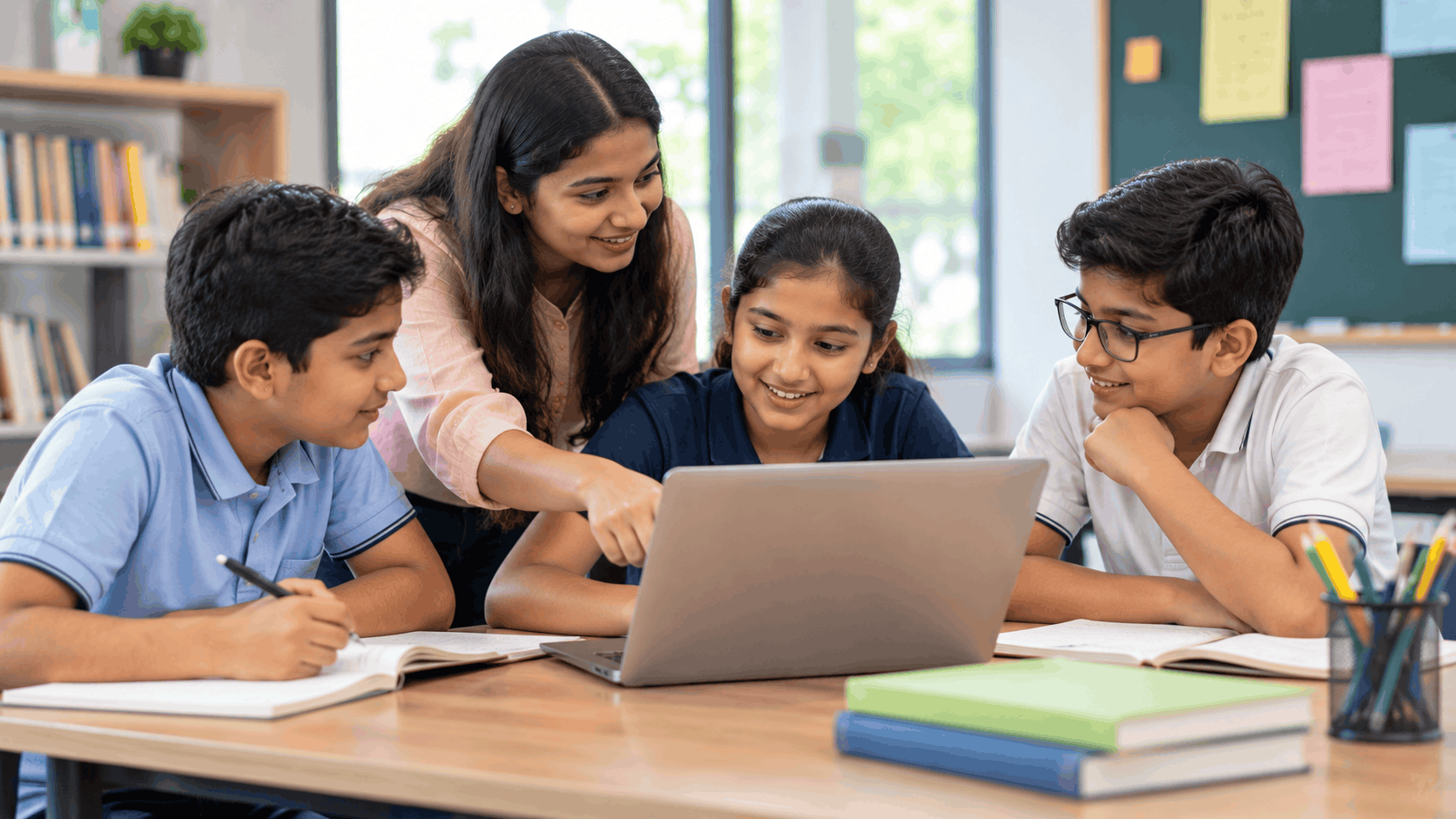
The most effective collaborative teaching techniques share a common feature: they build in both shared goals and individual accountability.
Think-pair-share is the simplest place to start. The teacher poses a question, learners think about it alone for a minute, discuss it with a partner, then share with the class. It gives every learner a chance to form an opinion before the more confident voices take over.
Jigsaw divides a topic into parts. Each member of a group studies one part, meets with members of other groups who studied the same part to become an expert, then returns to teach it to their original group. Nobody can complete the task without everyone else, so every contribution matters.
Peer instruction is widely used in university science courses. The lecturer asks a challenging conceptual question, students answer individually, then discuss with neighbours and answer again. Understanding often improves noticeably after the discussion.
Problem-based learning gives small groups a realistic, open-ended problem, such as a patient case, a business decision or an engineering challenge. Groups research, debate and propose a solution, with the teacher acting as a guide rather than a lecturer.
Structured roles help any group task run more fairly. Assigning a facilitator, a recorder, a timekeeper and a presenter, and rotating these roles, ensures that everyone participates.
Peer review asks learners to assess each other's work against agreed criteria. It sharpens the reviewer's judgement as much as it helps the writer.
The term collaborative teaching is also used for a different idea: two or more teachers planning and teaching a class together, often a subject specialist and a special educator. This co-teaching model brings different expertise into one classroom and allows more individual attention, and it shows learners what good collaboration looks like.
Examples of Collaborative Learning
Examples of collaborative learning can be found at every stage of education and work.
In a primary classroom, a teacher uses the jigsaw method for a lesson on animal habitats. Each child in a group of four researches one habitat, then teaches it to the others before the group produces a poster together. Collaborative activities like this are a regular feature of K-12 education, where they help children build communication skills alongside subject knowledge.
In a secondary school, students preparing for a debate are split into small teams. Each team researches one side of an argument, and members must agree on their strongest points before presenting.
In a university, medical students work through a patient case in groups of six, meeting several times over a fortnight to research symptoms, propose a diagnosis and defend their reasoning to a tutor.
In a company, a cross-functional team on a leadership programme is given a real business challenge to solve over six weeks, presenting recommendations to senior managers at the end.
Online, a professional course places learners in small cohorts who analyse a case together on a discussion board, edit a shared document and meet once a week on video to agree on their conclusions.
How to Make Collaborative Learning Work Online
Collaboration is harder online, but the same principles apply. Keep groups small, ideally three to five people, so nobody can disappear. Give each group a specific task with a clear output, such as a shared document, a recorded presentation or a decision with reasons. Use shared workspaces where everyone's contributions are visible. Schedule short live check-ins so groups do not drift. And assess both the group product and each individual's contribution, through a short reflection or a personal quiz on the material.
Above all, design the collaboration into the course from the beginning rather than adding it as an afterthought. Good instructional design decides where group work genuinely adds value, which technique fits each objective and how individual learning will be checked.
How Can Margo Learning Help With Collaborative Learning?
Collaborative learning succeeds when the tasks, roles and assessments are designed with care. Margo Learning's instructional designers and subject experts create group activities, case studies, problem-based scenarios, discussion prompts and assessment rubrics for schools, universities and companies, both in the classroom and online. Contact Margo Learning to discuss how to build more effective collaboration into your courses.
Frequently Asked Questions
It is a way of learning in which people work together in small groups towards a shared goal, helping each other understand the material along the way.