
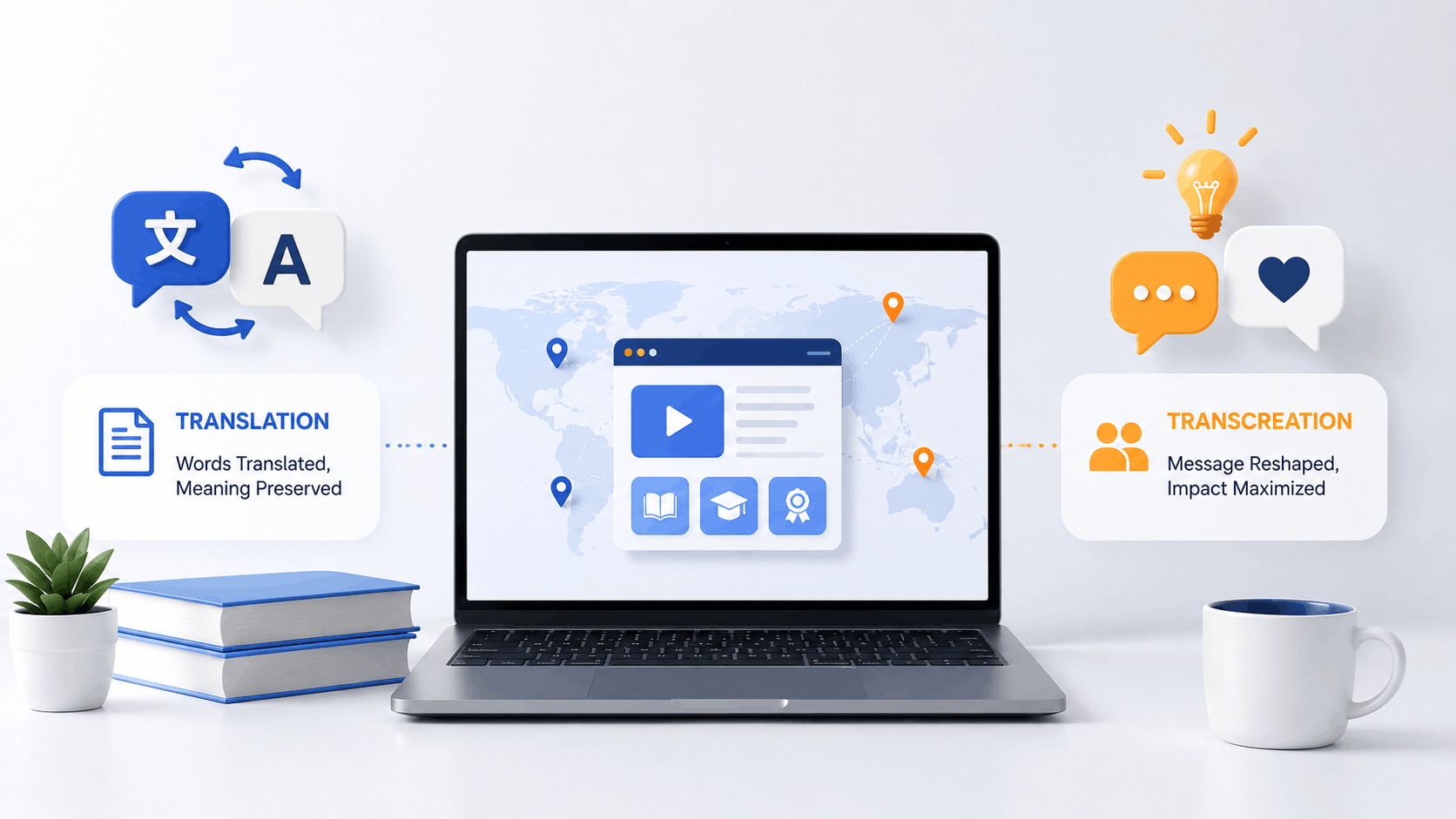
The difference between translation and transcreation for eLearning, and which content types genuinely need each approach.
Two Different Problems Wearing the Same Label
"We need this course translated for the Brazil market" and "we need this course adapted for the Brazil market" sound like the same request, but they describe two genuinely different processes with different costs, timelines, and outcomes. Translation converts words from one language to another with fidelity to the source meaning. Transcreation rebuilds content so it lands with the same intent, tone, and cultural relevance in the target market, sometimes changing examples, scenarios, imagery, and structure entirely.
Most organisations default to translation because it's cheaper and faster, and for a meaningful share of content, that's the right call. The problem is applying translation to content that actually needed transcreation, and not realising it until learner engagement data in the new market comes back weaker than expected.
Translation vs Transcreation: What Actually Differs
| Dimension | Translation | Transcreation |
|---|---|---|
| Primary goal | Linguistic accuracy to the source | Cultural and contextual relevance to the target audience |
| What changes | Language only | Language, examples, scenarios, imagery, sometimes structure |
| Typical cost | Lower | Higher |
| Typical timeline | Faster | Longer, requires local cultural review |
| Best suited for | Policy text, technical documentation, factual reference content | Scenario-based training, marketing-adjacent content, culturally specific examples |
| Risk if used incorrectly | Missed cultural nuance in scenario content | Unnecessary cost and delay on content that didn't need adaptation |
Content Types That Most Need Transcreation
- Scenario-based and workplace simulation content, where the situations, names, and social dynamics need to feel authentic to the local market rather than obviously translated from another culture
- Soft-skills and communication training, where directness, hierarchy, and conflict norms vary significantly across cultures and a literal translation can misrepresent appropriate behaviour
- Compliance training involving culturally sensitive topics, such as harassment or workplace conduct, where legal and cultural definitions can differ meaningfully by region
- Any content using idioms, humour, or culturally specific references that do not translate literally without losing meaning or, worse, causing confusion or offence
- Marketing-adjacent onboarding or brand content, where tone and messaging need to resonate locally, not just read correctly
Content Types Where Translation Alone Usually Works
- Technical documentation and reference material with limited cultural context
- Policy and compliance text where legal accuracy matters more than cultural framing
- Factual, procedural content such as software instructions or safety protocols
- Assessment content testing factual or technical knowledge rather than judgement in social situations
Margo Learning's Process for Adapting Content Without Starting From Scratch
- Content is first assessed against a cultural-sensitivity checklist to determine whether translation alone is sufficient or transcreation is needed
- Native-market SMEs and instructional designers, not just linguists, review scenario-based content for cultural fit
- Only the elements that genuinely need adaptation, specific scenarios, examples, or imagery, are rebuilt, rather than reworking the entire module from zero
- Adapted content goes through a local review cycle with in-market reviewers before being finalised
- The underlying instructional design and learning objectives stay constant across markets, so outcomes remain comparable even as delivery is localised
The Bottom Line
Translation and transcreation solve different problems, and treating them as interchangeable is where most international eLearning rollouts lose engagement without anyone quite knowing why. The right approach is content-type specific: translate what is factual and procedural, transcreate what is scenario-based, cultural, or judgement-driven, and make that call deliberately rather than defaulting to whichever option is cheaper.
Margo Learning helps organisations make this call project by project, adapting learning content for genuine cultural relevance without rebuilding from scratch every time.